Category

Event

National activation approach with Italian public administrations

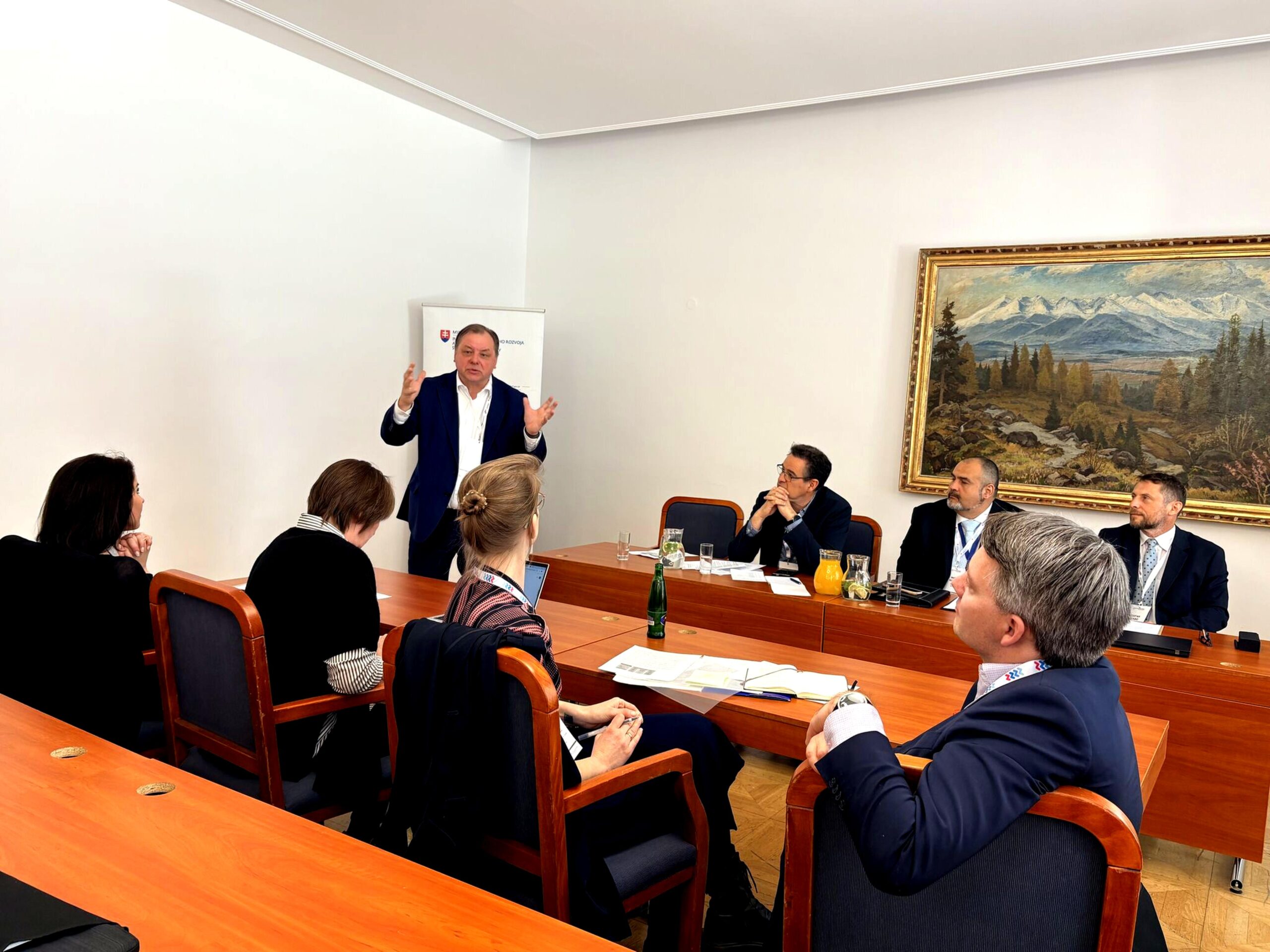
On 25 June 2026, the LDT CitiVERSE EDIC launched its national activation approach during a webinar for Italian public administrations, organised together with the Living-in.EU community.

The session marked an important first step in building national EDIC ecosystems: networks of cities, public administrations, national organisations, research actors and European partners working together around Networked Local Digital Twins and Citiverse services.

Rather than presenting the EDIC as a one-size-fits-all European framework, the session focused on how the EDIC can connect with existing national initiatives, local priorities and practical city needs. For Italy, this means identifying how local digital twin experiences, national networks and ongoing projects can contribute to a more interoperable and scalable European ecosystem.

Jan Wester, Director of the LDT CitiVERSE EDIC, opened the session by introducing the EDIC and explaining why national collaboration is essential to its implementation. The EDIC aims to support cities and regions with common digital infrastructure, services and tools that help avoid fragmentation, strengthen interoperability and make digital twin solutions easier to reuse across Europe.

The Italian perspective was presented through several complementary contributions. Lucia Merlino and Anna Zilioli introduced AnciLab’s role in the EU Smart Communities Network and shared insights from Italian local digital twin initiatives, including the FREE-WAY smart mobility project developed in the province and city of Como.

The session also brought in experiences from other European contexts. Koos Boersma, representing the Netherlands in the LDT CitiVERSE EDIC, explained how Dutch geospatial data initiatives are helping to address challenges such as housing and the environment, while contributing to a bottom-up local digital twin ecosystem at European level.

Antonella Longo presented the ECHO-TWIN project for federated local digital twins and highlighted the cooperation between the University of Salento and the city of Brindisi, including potential synergies with the LDT CitiVERSE EDIC and the EU LDT Toolbox. Gelsomina Macchitella then shared Brindisi’s experience as a city testbed, showing how digital innovation can be connected with local resources, partnerships and urban regeneration priorities.

The session concluded with an interactive workshop moderated by Jaan Saar. Participants discussed what Italian administrations need from the EDIC city journey and service portfolio, helping to shape future services around real local requirements and national contexts.

This first national activation session confirms a key principle of the LDT CitiVERSE EDIC: European scale will only be achieved by working with national ecosystems and city-level realities. The goal is not to replace what already exists, but to connect, validate and scale what works — enabling cities to benefit from shared infrastructure, common standards, practical guidance and a stronger European market for interoperable digital twin and Citiverse solutions.

The recording of the session is available here, while the slides can be accessed at the following link.

For questions regarding the LDT CitiVERSE EDIC, please contact communications@ldtcitiverse-edic.eu.

livingineu-national-activation-italy

EU LDT Toolbox Launch Event: From development to adoption

eu-ldt-toolbox-launch-event-3

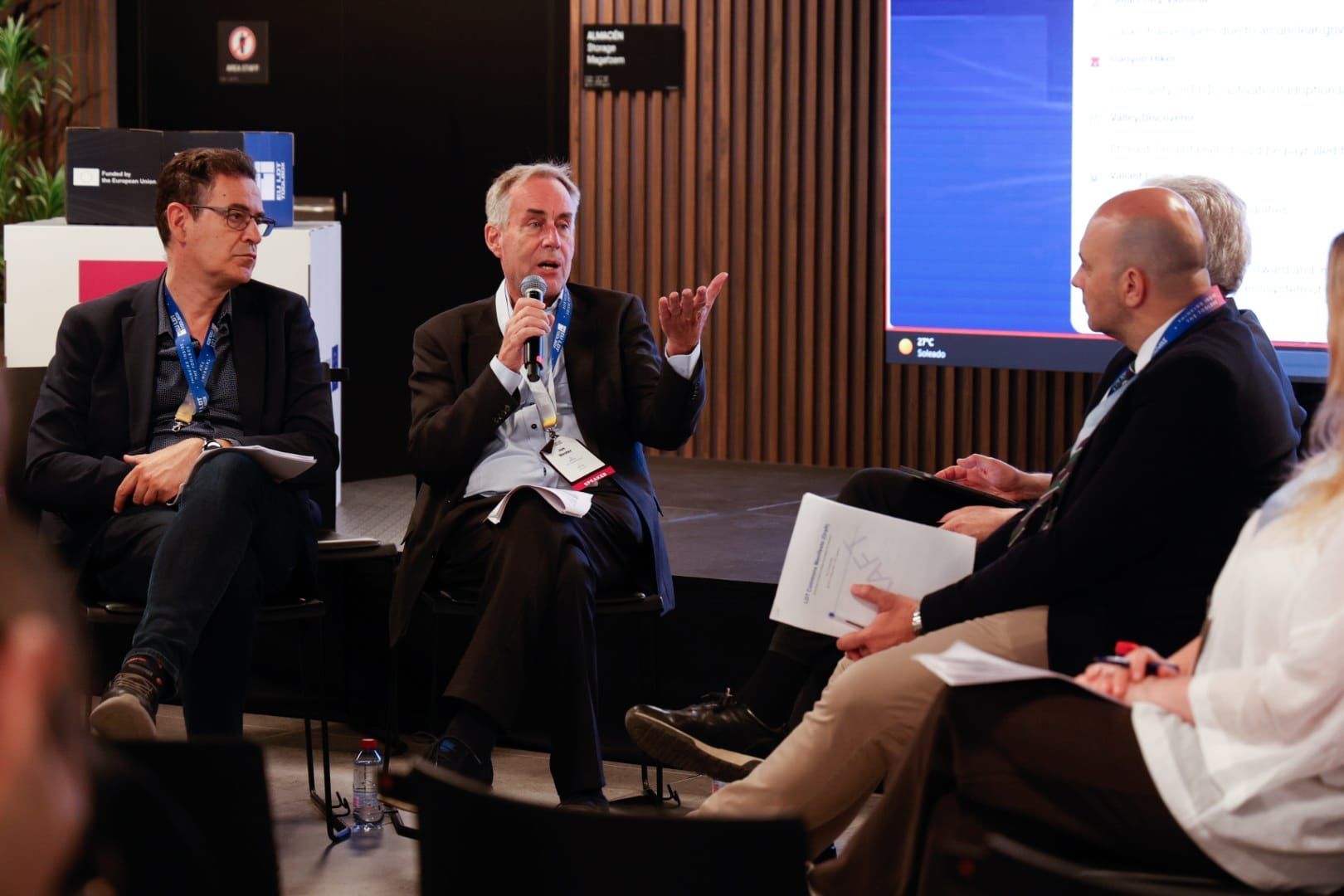
On 16–17 June, the European Local Digital Twin community gathered in Valencia for the presentation of the results of the EU LDT Toolbox, an important milestone for cities, regions, researchers, innovators and institutions working on interoperable digital urban infrastructure.

Over two days, the EU LDT Toolbox consortium shared the outcomes of its work with the wider LDT community through live demonstrations, hands-on sessions, pilot city experiences and strategic discussions on the future of Local Digital Twins in Europe.

The Toolbox provides an open-source infrastructure for interoperable Local Digital Twins, based on modular building blocks and shared standards. Its purpose is to help cities and regions simulate, analyse and plan urban environments more effectively, while strengthening local digital sovereignty and avoiding fragmented or duplicated solutions. But the main message from Valencia was clear: Europe now moves from development to adoption.

Local Digital Twins are no longer only about experimentation or isolated pilot projects. Cities need practical tools, implementation capacity, operational models and adoption mechanisms that they can actually use. They need shared infrastructure, governance continuity, sandbox environments, and a European community that supports reuse, interoperability and scale.

This is where LDT CitiVERSE EDIC will play a central role. As the European ecosystem moves into this new phase, LDT CitiVERSE EDIC will act as a “clubhouse” for the European Local Digital Twin community: a place where cities, regions, academia, innovators, companies and public institutions can connect, collaborate and build on shared assets.

In practice, this means supporting the next phase of the EU LDT Toolbox by:

  • making the Toolbox available through the EDIC’s portal and infrastructure for cities, regions, academia and innovators;
  • offering sandbox facilities for cities to test, integrate and provide feedback on tools and components;
  • providing governance continuity and institutional legitimacy for community decisions;
  • connecting the Toolbox with other national and European initiatives to strengthen synergies and avoid fragmentation.

The Valencia gathering also highlighted the importance of building a stronger European commons around Local Digital Twins: a shared space for knowledge, open-source components, implementation experience, standards and reusable solutions.

This collective approach is essential if Europe wants to move from individual projects to a sustainable, interoperable and sovereign digital infrastructure for cities.

We would like to thank the entire EU LDT Toolbox consortium, led by Patricia Tamarit, Dr. Antonio J. Jara and Ivan Lalaguna Alcaine, for their work and commitment, as well as all cities, partners, experts and institutions that contributed to the discussions in Valencia.

The completion of the EU LDT Toolbox is not an end point. It is the beginning of a new phase focused on adoption, validation, collaboration and long-term impact. At LDT CitiVERSE EDIC, we look forward to working with the community to turn this shared momentum into practical value for cities and regions across Europe.

eu-ldt-toolbox-launch-event-1
eu-ldt-toolbox-launch-event-2
eu-ldt-toolbox-launch-event-3

EU LDT Toolbox enters a new phase: from project to European public infrastructure

On 16–17 June 2026, Valencia will host the official launch of the EU Local Digital Twin (LDT) Toolbox, marking an important milestone in Europe’s journey towards interoperable and scalable Local Digital Twins.

Developed over three years by a consortium of six European partners and validated through real-world implementations in pilot cities, the EU LDT Toolbox is now entering a new phase: moving from a project-based initiative to a mature, deployable European public infrastructure.

The launch event will bring together cities, technical experts, European institutions and ecosystem partners to present the consolidated solution and discuss its future evolution. More importantly, it will mark the beginning of a governance transition, with the LDT CitiVERSE EDIC taking on a central role in supporting the long-term maintenance, growth and adoption of the Toolbox across Europe.

A ready-to-deploy solution for European cities

The EU LDT Toolbox provides an open-source, standards-based infrastructure that enables cities and communities to build interoperable Local Digital Twins without starting from scratch.

The solution combines a stable architecture, a portfolio of functional tools, a European building database and an active marketplace ecosystem, offering public administrations practical building blocks for data integration, simulation, decision support and urban innovation.

Built on common European interoperability standards, the Toolbox helps cities accelerate digital transformation while reducing fragmentation, duplication and vendor lock-in.

From pilot projects to large-scale adoption

A key focus of the event will be sharing the experience of European pilot cities that have already implemented the Toolbox in practice.

Their results, lessons learned and operational feedback have helped shape the final product and demonstrate its potential to support evidence-based policymaking, urban planning and cross-domain city management.

The event will also showcase how the Toolbox connects with the wider European ecosystem of Local Digital Twins, data spaces and digital infrastructure initiatives, reinforcing the importance of interoperability and collaboration at European scale.

The role of LDT CitiVERSE EDIC

For the LDT CitiVERSE EDIC, the launch represents an important step towards building a sustainable European ecosystem for Local Digital Twins.

As the governance model evolves, the EDIC will help ensure continuity beyond individual projects, supporting adoption, community building, maintenance and future development. This approach aims to transform valuable project results into long-term public digital infrastructure that can be reused, improved and scaled across Europe.

The launch in Valencia therefore marks not the end of a project, but the beginning of a new phase focused on implementation, adoption and long-term impact.

As cities face increasingly complex challenges, from climate adaptation and mobility to housing and resilience, the EU LDT Toolbox provides a practical foundation for building interoperable, data-driven and future-ready urban services across Europe.

eu-ldt-toolbox-launch-event-banner

Outcomes of the 2nd Citiverse Assembly 2026

citiverse-assembly-un-virtual-worlds

May 11 and 12 the LDT Citiverse EDIC and several partners participated in the 2nd Citiverse Assembly 2026 and the 3rd UN Virtual Worlds Day 2026 hosted at the ITU Headquarters in Geneva.

Co-organized by the ITU, the European Commission, UNICC, OASC and supported by StandICT.eu 2029, the Assembly brought together governments, ambassadors, city leaders, standards organizations, industry, academia and innovators from around the world to explore how AI, spatial intelligence and the AI-enabled citiverse can help shape trusted, inclusive and people-centred digital futures.

Both events marked an important milestone in strengthening international cooperation on interoperability, standards and implementation frameworks for AI-enabled citiverse and digital twins, while promoting open, trusted, interoperable and people-centred digital ecosystems.

The event also marked the launch of key deliverables including:

  • AI-Enabled Citiverse: A Strategic Blueprint for Cities in the Age of AI;
  • City Leader’s Field Guide: Preparing for the AI-Enabled Citiverse.
  • The launch of the Executive Briefing on “AI, Spatial Intelligence and the AI-Enabled Citiverse”;
  • The endorsement of the “Call to Action for Humanity”.

Jan Wester, director of LDT CitiVERSE EDIC, took part in the session “Citiverse Projects: A Global Snapshot”, giving an overview of the ongoing work towards the ambitious mission of building the European “Citiverse”. Find out more here.

Next phase of LDT CitiVERSE EDIC

edic-general-assembly-2904

Last week marked an important milestone for the LDT CitiVERSE EDIC during its General Assembly in Bratislava, the capital of Slovakia. During the meeting, Director Jan Wester presented the strategic roadmap for the coming years.

Representatives from all 15 member states gathered in person and unanimously endorsed the proposed strategic direction, including the development framework designed to help achieve the EDIC’s long-term mission and objectives.

The roadmap presented during the meeting illustrates the transition from a project-based structure towards a long-term collaborative European infrastructure model:

edic-roadmap

This sends a clear signal that member states are ready to move beyond a temporary, project-driven setup towards a more sustainable cooperation model with long-term capacity, structural impact, stronger implementation power and dedicated budgeting.

Among the key developments agreed upon:

  • The professionalisation and strengthening of the EDIC core organisation through direct financial contributions from member states, ensuring long-term continuity and operational capacity.
  • A commitment from member states to develop national activation programmes focused on major societal challenges, potentially leading to future Multi-Country Projects in areas such as:
    • Urban Planning & Housing
    • Resilience, including flood management
    • Circular & Green Transition
    • Local Digital Maturity & Sovereignty

One message became especially clear throughout the discussions: cities need practical solutions, interoperable open standards and scalable cooperation models.

National programmes may differ in ambition and implementation approach, but all aim to activate and organise cities, regions and public entities within national EDIC ecosystems under a shared European framework. In this context, the EDIC will play a key role as a neutral European market infrastructure enabling collaboration at scale, a strong example of multi-level governance in practice.

Perhaps, the most joyful news was that Finland received ministerial approval to join the LDT CitiVERSE EDIC. The momentum behind the initiative across Europe is clearly accelerating.

edic-general-assembly-bratislava

GovTech in Europe at Mayors’ Leadership Forum

mayors-leadership-forum

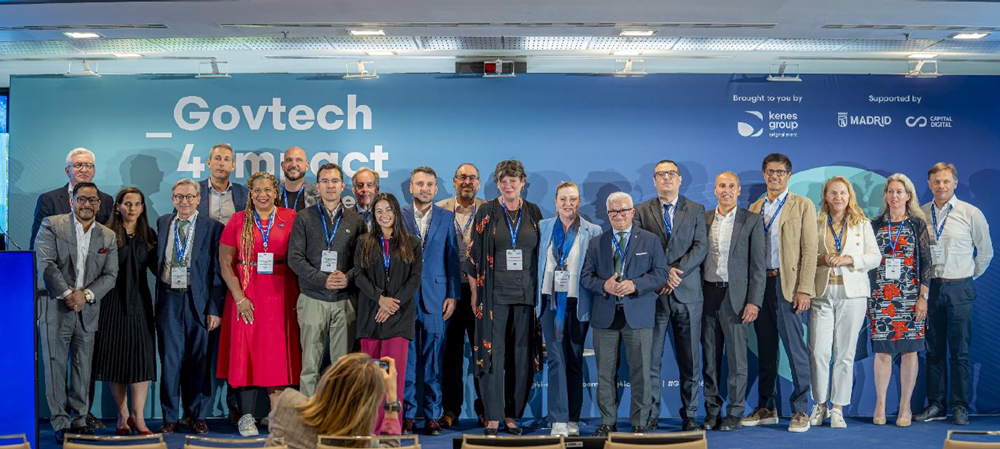
At the GovTech 4 Impact World Congress 2026 in Madrid, city leaders, institutional partners and international organisations came together for the first edition of the Mayors’ Leadership Forum, an initiative focused on accelerating the digital transformation of cities through coordinated GovTech action.

The Forum brought together representatives from cities across Europe and the United States, alongside organisations including CEMR, the European Commission and the LDT CitiVERSE EDIC, with a shared objective: moving beyond fragmented digital initiatives towards a more coordinated and scalable GovTech ecosystem.

A central outcome of the Forum was the launch of the GovTech Manifesto and its accompanying Action Plan, which outline a practical framework for how cities and public administrations can collaborate more effectively around digital transformation.

Rather than focusing only on technology adoption, the initiative positions cities and regions as active market shapers, capable of driving innovation through coordinated demand, shared standards, procurement strategies and interoperable digital infrastructures.

The Manifesto highlights a growing challenge across Europe: while investments in AI, data spaces and digital infrastructure continue to increase, public sector innovation often remains fragmented, difficult to scale and slowed down by complex procurement and compliance processes.

The proposed approach focuses on creating the conditions needed for implementation at scale. This includes:

  • Shared and reusable solutions for common societal challenges
  • Coordinated procurement approaches between cities
  • Interoperable GovTech market infrastructures
  • Compliance and validation mechanisms
  • Stronger public-private collaboration ecosystems
  • Continuous learning and capacity building for governments

The accompanying Action Plan translates these ambitions into seven concrete implementation building blocks, designed to be developed collaboratively by participating cities and institutional partners over the coming year.

A recurring message throughout the Forum was that the challenge is no longer technological capability, but governance, coordination and execution capacity.

As cities face increasing pressure linked to climate adaptation, housing, mobility, public services and digital sovereignty, the Forum reinforced the idea that collaboration between cities, regions and European institutions will be essential to scale innovation in a structured and sustainable way.

The initiative is designed as an operational coalition rather than a one-off discussion platform. Participating cities and partners will now work on translating the Action Plan into practical implementation pathways, with progress expected to be presented at the next edition of the Forum.

For the LDT CitiVERSE EDIC, the Forum confirmed the growing need for shared European implementation frameworks that help cities move beyond isolated pilot projects towards scalable deployment. Many of the themes discussed, including interoperability, coordinated procurement, sandboxes and capacity building, are closely aligned with the operational approach currently being developed through the EDIC ecosystem.

The EDIC Sandbox Alliance: instrument for validations from practice

The LDT CitiVERSE EDIC aims to close the gap between the results of European and National innovation calls and the actual operationalization thereof in the primary processes of cities and regions. For this the interoperability, replicability, scalability and robustness of solutions and infrastructure must be validated in the context and dynamics of city’s daily practices. To do so products, services and facilities need to be tested beyond pilot phase in the sandboxes of cities and regions themselves.

To this end the EDIC Sandbox Alliance is being designed as a ‘validation from practice’ instrument. The EDIC Sandbox Alliance contains a group of leading cities that are willing and able connect their sandboxes to test, validate and deploy the EDIC tools, infrastructure and services on a Pan-European scale.

  • The EDIC Sandbox Alliance is open to every city. To develop the principles of cooperation, the Alliance will start with a core group of cities that involve Valencia, Barcelona, Rotterdam, Tampere and Riga.
  • The EDIC will provide a common platform to document validations in a harmonized way, making results exchangeable and comparable and thus enhancing cooperation.
  • An EDIC Sandbox Working Group will identify and plan validations so capacity and funding can be prioritized and planned in a predictable way.
  • Concrete city use cases and fundamental infrastructure issues will be jointly programmed as they are interdependent and instrumental to each other. Value cases deliver proof of value (policy, societal and operational value) for cities and regions and the fundamental infrastructure facilitates the capacity building to operationalize interoperable dataflows, trusted transactions and delivery and enhances the digital maturity and digital sovereignty of cities and regions in a structural way.
    This public digital infrastructure lays the foundation for a thriving public-private application ecosystem (DT-marketplace/ -Appstore).
  • The Sandbox Cities ecosystems will function as a best practice model to show the working in practice of the EDIC portfolio. The cities will factual function as ‘showroom’ and become ‘EDIC-outlets’ for other European Cities.

LDT CitiVERSE EDIC appoints Jan Wester as its director

Barcelona, 4 November 2025 — With the signing of the Placement Agreement, Mr. Jan Wester has officially taken office as the new Director of the European Digital Infrastructure Consortium for Networked Local Digital Twins towards a European Citiverse (LDT CitiVERSE EDIC).

The LDT CitiVERSE EDIC is a collaboration of 14 European countries that will work on a common European digital infrastructure for interoperable platforms and advanced AI services, with the ambition to create the European Citiverse. Wester will fulfill this role for the next 3 years as seconded director from the Spatial Information Directorate of the Dutch Ministry of Housing and Spatial Planning. He will work with a Pan-European team and in close cooperation with the Living-in.EU community.

The EDIC builds on the results of various European initiatives. These results are made available in a diverse portfolio of products, services and facilities that include test and experiment facilities (e.g. CitCom TEF), computing power (e.g. AI factories), the EU LDT-toolbox, but also training courses, maturity assessments and a procurement helpdesk.

The agreement was signed by Ernesto Faubel, chair of the LDT-CitiVERSE EDIC Assembly, Jan Wester, director LDT CitiVERSE EDIC and Bob van Graft, director at the Dutch Ministry of Housing and Spatial Planning during the Smart City Expo.

ldt-citiverse-edic-appoints-new-director-1

From pilots to economies of scope and scale

By building a network of local digital twins, EU cities and regions can more efficiently develop, exchange and reuse digital twin modules and advanced AI solutions enabling them to address complex societal challenges, such as climate adaptation, housing and mobility. The Edic secures interoperability and scale creating a future-proof digital infrastructure that safeguards European values, strengthens digital autonomy.

ldt-citiverse-edic-appoints-new-director-2
ldt-citiverse-edic-appoints-new-director-3

“Digital twinning and virtualization is key to address a growing lack of resources and a common ground for stakeholders.  A healthy perspective on scale and operationalization is the key to success. This requires cooperation and validation from practice. The interoperable products, services and facilities of the EDIC provide a solid foundation for a thriving Public-Private ecosystem that improves public services and stimulates market innovation.”

– Jan Wester, director of LDT CitiVERSE EDIC

Insights from the Living-in.EU Digital Assembly 2025

ldt-citiverse-edic-living-in-eu-digital-assembly-3

On 15 October 2025, the Living-in.EU Digital Assembly brought together city leaders, regional authorities, innovators and policy-makers to reflect on Europe’s digital transformation pathway. The day unfolded under a unifying theme – Empowering Cities and Regions through Data and People-Centred Digitalisation – and provided an open forum to explore how local and regional actors can harness artificial intelligence, interoperability and open data to drive meaningful public value. Throughout the event, speakers shared practical examples, strategic insights and calls to action for a more connected, trusted and citizen-driven digital future.

Among the key contributors was Jan Wester, Director of LDT CitiVERSE EDIC, whose intervention underlined that the key challenge today is not the lack of technology, but the need to connect existing tools, platforms and testbeds in meaningful ways. Wester emphasised that while cities and regions have access to an expanding landscape of digital and virtual tools, their real impact depends on linking testbeds, living labs and governance structures in ways that generate shared value.

The Director encouraged cities to clearly define their needs and expected outcomes to ensure that technology deployments deliver real value for citizens. He stressed the importance of multi-level cooperation and robust public-private partnerships built on trust, ethical alignment and clear expectations. His intervention reinforced the Assembly’s wider message: Europe’s digital transition will advance when cities, industry, academia and citizens work together through shared frameworks, ethical principles and long-term collaboration.

Read the full article on Living-in.EU website.